
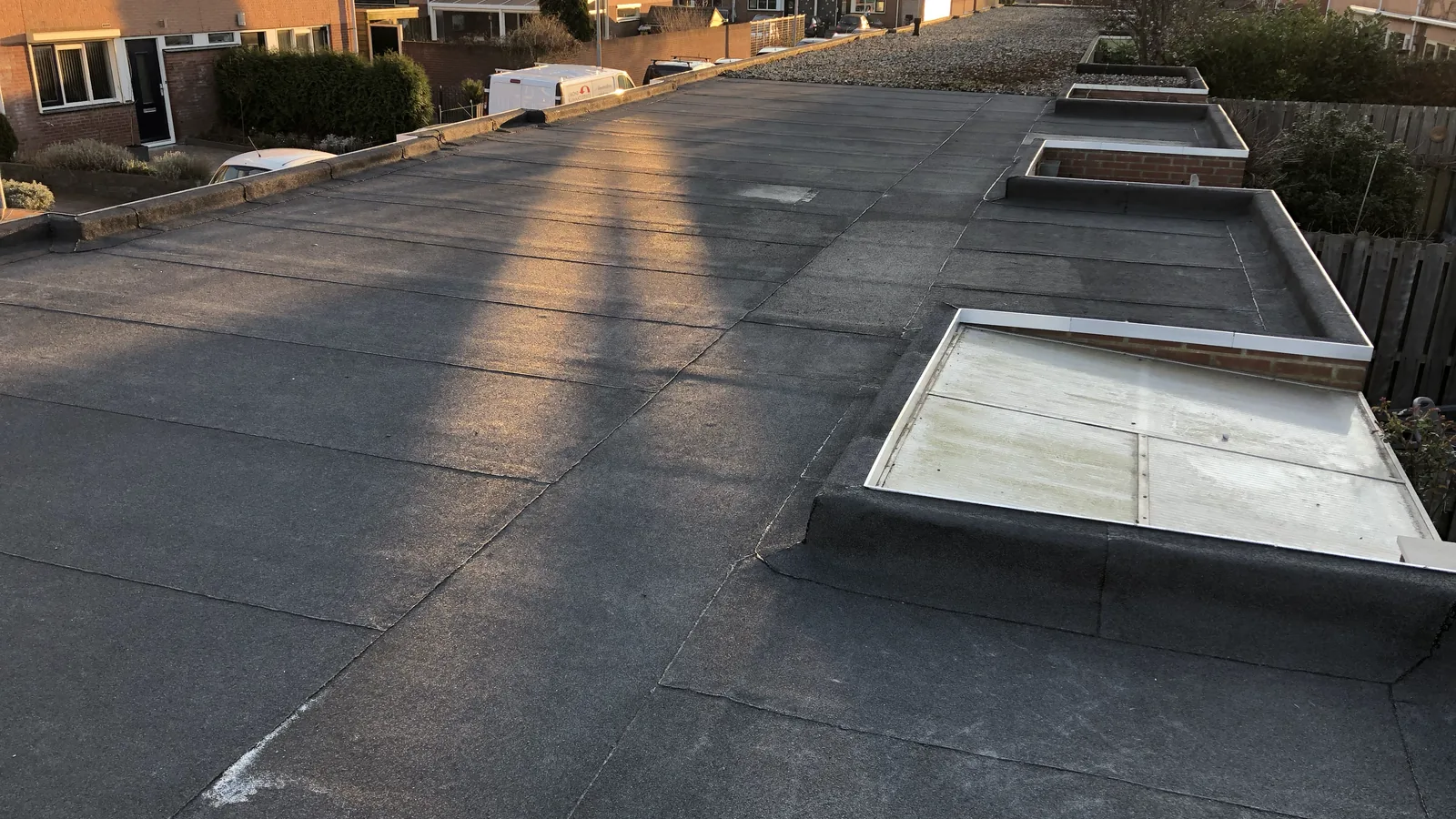
Roof leaks usually come from damaged tiles, cracks or seams in bitumen roofing, leaking lead or zinc flashings around a chimney or skylight, or a blocked gutter. A roofer traces the true source and repairs it precisely. Cost depends on roof type and damage, so request a free roof inspection.
What are the most common causes of a roof leak?
A leaking roof almost always has an identifiable cause. The spot where water enters, however, is rarely where the leak actually is: water runs along beams and roof boarding before it drips inside. That is why the cause differs per roof type, and why it pays to look carefully before repairing anything.
Roof leaks on a tiled (pitched) roof
On a pitched roof with roof tiles, leaks usually come from shifted, cracked or porous tiles, broken ridge tiles, or worn underlay membrane that no longer catches wind-driven rain. Wood rot in the roof boarding or battens often plays a part too. On older roofs the water barrier is simply past its prime. Sometimes replacing a few tiles is enough; sometimes the whole underlay needs renewing.
Roof leaks on a flat roof
On a flat roof in bitumen or EPDM, the leak usually sits in the seams, in cracks or blistering in the top layer, at poorly finished edges, or around penetrations and skylights. With bitumen the top layer ages under UV and can start to craze. Standing water from poor drainage or a blocked outlet speeds this up. Targeted repair is often possible, and in many cases an overlay — a fresh bitumen layer over the old one — is the smartest fix.
Chimney, skylight, lead and zinc
A large share of all leaks is not in the roofing itself but at the junctions: the lead and zinc around the chimney, the lead flashings at a skylight, the wall abutments and the valley gutters. Lead cracks or works loose, mortar weathers and sealant dries out. These are the spots we check first.
Gutters, valleys and drainage
A blocked or leaking gutter lets water overflow against the facade and roof boarding, causing wood rot and damp patches. Leaves, moss and grit are the usual culprits. Regular cleaning prevents a lot of trouble.
How exactly does a roofer trace a leak?
We always start both outside and inside. In the attic we look for the highest damp patch and the path the water takes; on the roof we systematically check the tiles, seams, junctions and gutters. Sometimes a leak is immediately visible; sometimes we use a targeted water test to find the exact route. That care prevents us from repairing the wrong spot. When in doubt, or with a recurring leak, we recommend a full roof inspection so you have certainty about the true condition of the roof.
How is each type of leak repaired?
- Loose or broken tiles: replace, re-lay and, where needed, repair the rotten wood and membrane underneath.
- Bitumen flat roof: repair seams and cracks locally, or overlay the entire roofing for a watertight, better-insulated result.
- EPDM: cut out the damage and patch in a new piece, or re-bond the junctions.
- Lead and zinc: renew worn flashings and wall abutments, repair mortar joints.
- Gutters: clean, seal or, with serious wear, replace.
For individual problems, see our roof repair; for recurring or large-scale leaks, targeted roof leak help or a renovation is often wiser than patching time after time.
What determines the cost of the repair?
We deliberately do not publish prices, because no two roofs are the same. An honest price is only possible after we have seen the roof. The cost is driven by:
- the roof type (flat or pitched) and the materials used;
- the extent and nature of the damage and the state of the substrate;
- the accessibility and whether scaffolding or an aerial platform is needed;
- any wood rot, insulation, dormers or skylights that must be addressed;
- the edge finishing and the removal of old roofing.
That is why a free, no-obligation quote — often after a short roof inspection — is the only honest way to know what the repair will cost.
What about insurance and prevention?
Sudden damage, such as from a storm or a tile broken in severe weather, is often covered by your buildings insurance; gradual wear or deferred maintenance usually is not. Read more about what to do when your roof leaks in heavy rain. Prevention remains best: have your roof inspected periodically, keep the gutters clean, and tackle small defects before they cause major damage.
Do you have a leak, or suspect one? Send us a message — you will get a reply within 2 hours, and we are often with you within 24 hours. We come and look, trace the real cause, and give you a free, no-obligation quote. On our roofing work you get up to 15 years of warranty. At Dakservice van Belzen you are never just a number.
Last updated:
Frequently asked questions
That is hard to determine yourself, because water runs along beams before it enters. The damp patch inside is therefore often not directly under the real leak. A roofer systematically checks the attic inside and the tiles, seams, junctions and gutters outside, sometimes with a targeted water test, to find the true cause.
Sudden damage, for example from a storm or severe weather, is often covered by buildings insurance. Gradual wear and deferred maintenance are usually not covered. With sudden damage, always take photos and contact your insurer. We are happy to help with a well-documented repair report.
That depends on the roof type, the nature and extent of the damage, the accessibility, any wood rot and the edge finishing. That is why we only give a price after we have seen the roof. You always receive a free, no-obligation quote, often after a short roof inspection.
You get a reply within 2 hours via WhatsApp, and we are often on site within 24 hours. For acute leaks we act as fast as possible to prevent further damage. We are based in Beverwijk and active throughout North Holland and the surrounding area.