
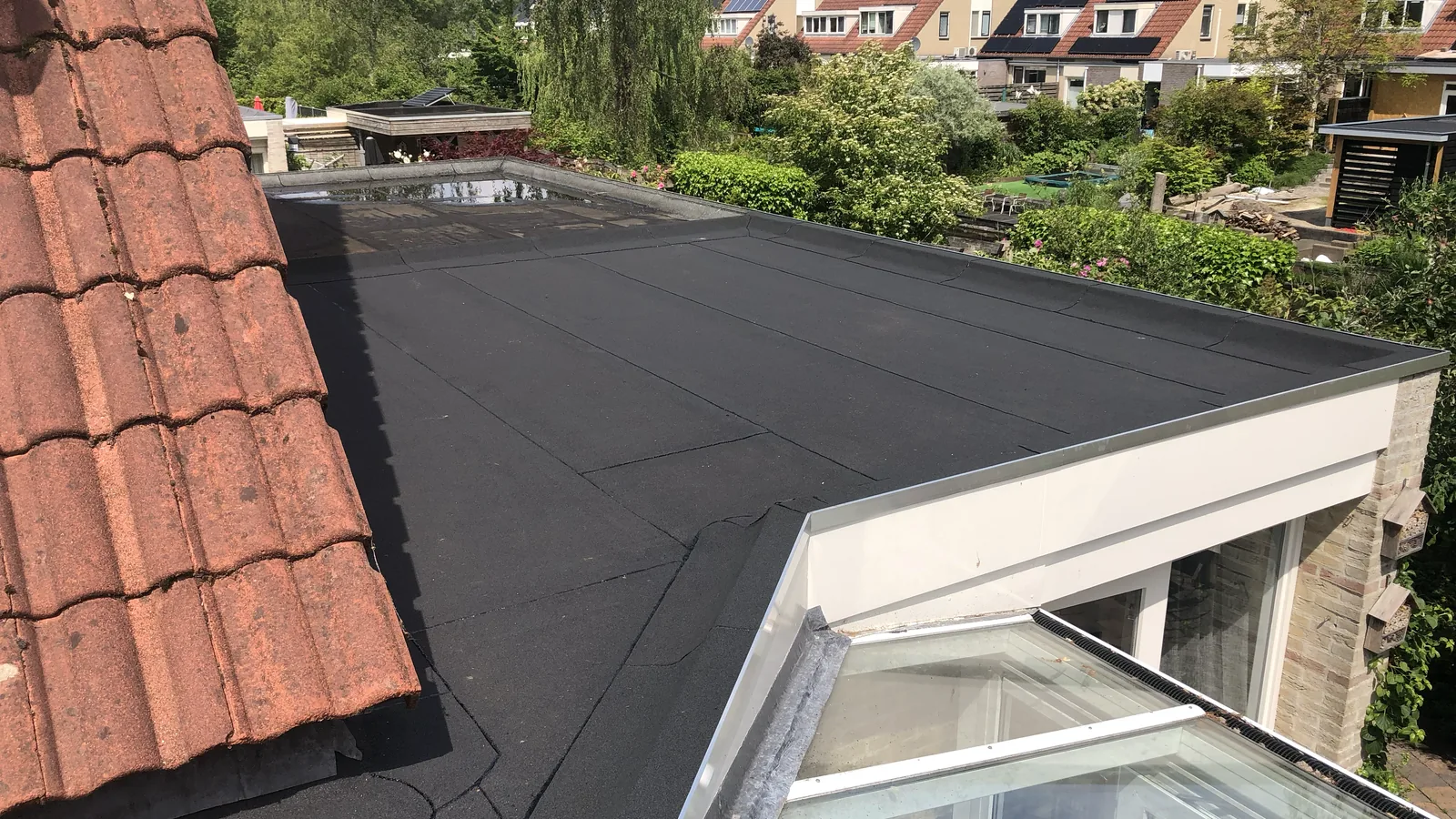
A roof's lifespan depends largely on the roofing material: a bitumen flat roof lasts roughly 20 to 30 years, EPDM 40 to 50 years, clay and concrete tiles 50 to 100 years, and zinc 40 to 60 years. Good maintenance and regular inspection extend that life considerably.
How long does a roof last on average?
A roof does not simply last a fixed number of years. Its lifespan is determined mainly by the type of roofing, the quality of the installation, and how well you maintain it. At Dakservice van Belzen we see roofs that need replacing after just 15 years, but also bitumen roofs that, with good care, easily last well over 30 years. Below you will find the average lifespan per material, plus the factors that shorten or extend it.
What is the lifespan of each roofing type?
The table below gives a realistic indication of lifespan per roofing material, based on what we encounter in practice across North Holland. The figures assume professional installation and regular maintenance.
| Roofing material | Average lifespan | Maintenance | Suitable for |
|---|---|---|---|
| Bitumen (flat roof) | 20–30 years | Periodic checks, small repairs | Flat roofs, garages, extensions |
| EPDM (rubber) | 40–50 years | Very little maintenance | Flat roofs, roof terraces |
| Clay roof tiles | 50–100 years | Low, but check tiles | Pitched roofs |
| Concrete roof tiles | 30–50 years | Low to medium | Pitched roofs |
| Zinc | 40–60 years | Very low | Gutters, valleys, roof edges |
Important: the tiles themselves often last far longer than the structure beneath them. The woodwork, battens, underlay foil and ridge tiles usually need renewing before the tiles do. Want to know which tiles last longest? Read our article on clay or concrete roof tiles.
Which factors shorten a roof’s lifespan?
Two identical roofs can differ by ten years in lifespan. That comes down to these factors:
- Deferred maintenance — moss, leaves and dirt trap moisture and accelerate ageing.
- Location and weather — strong sunlight (UV), shade, wind and salt in coastal air (relevant in much of North Holland) attack roofing.
- Poor ventilation — insufficient ventilation under the roof leads to moisture, condensation and wood rot.
- Blocked gutters — standing water strains the roof edge and can cause leaks.
- Poor installation — badly executed seams or edge finishing is the most common cause of premature problems.
How do you extend your roof’s lifespan?
The cheapest repair is the one you prevent. A few habits add years to your roof:
- Have the roof inspected regularly — we recommend every 1 to 2 years, and always after a storm.
- Keep gutters and downpipes clear so water can always drain away.
- Remove moss and algae in good time, especially on north-facing pitched roofs.
- Fix small defects straight away — a loose tile or starting blister in bitumen is quickly resolved, but costly if left untreated.
- Replace rotten woodwork immediately so the damage cannot spread.
During a renovation in Amstelveen, for example, we replaced the rotten woodwork underneath and laid new VHV Vario tiles with spunbond underlay foil — leaving that roof in great shape for decades. Sometimes a full roof renovation is wiser than continuing to patch.
When is it time to replace your roof?
Watch for these signs that the end of the lifespan is near:
- Recurring leaks, even after repair — see also our page on roof leaks.
- Blisters, cracks or bare patches in the bitumen.
- Many shifted, cracked or porous roof tiles.
- Sagging or soft-feeling roof decking (often wood rot).
- Damp patches or mould on the inside of the roof.
Unsure whether to repair or replace? That depends on the roof’s age and the extent of the damage. A 5-year-old roof you repair; a 28-year-old roof with multiple defects is often more cost-effective to replace in one go. An honest roof inspection gives you clarity.
Does maintenance really matter that much?
Yes. A well-maintained bitumen flat roof easily reaches the top of its range (30 years), while a neglected one can fail after just 15. For flat roofs we also offer our overlay method: a new bitumen layer over the old one. This is faster and more affordable than full replacement, improves insulation, and makes the roof fully watertight again — an excellent way to extend lifespan without complete removal. You can read more on our page about flat roofs.
Want to know how much life your roof has left, and whether it needs maintenance, an overlay or replacement? We are happy to come by for a free, no-obligation inspection and honest advice. You will get a reply within 2 hours via WhatsApp, and we offer up to 15 years’ warranty on our roofing work. With us, you are never just a number.
Last updated:
Frequently asked questions
A well-installed bitumen flat roof lasts an average of 20 to 30 years. With regular maintenance and timely small repairs you reach the top of that range. Our overlay method (a new bitumen layer over the old one) can extend the lifespan further without removing the entire roof.
Clay roof tiles last the longest, often 50 to 100 years. Note, however, that the underlying structure (woodwork, battens, underlay foil) usually lasts less long than the tiles themselves and tends to need renewing sooner.
That depends on the roof's age and the extent of the damage. A young roof with one defect you repair; an old roof with multiple problems is often more cost-effective to replace in one go. A roof inspection gives you an honest answer.
We recommend an inspection every 1 to 2 years, and always after a heavy storm. Regular checks prevent small defects from growing into leaks or wood rot, and thereby extend your roof's lifespan considerably.