
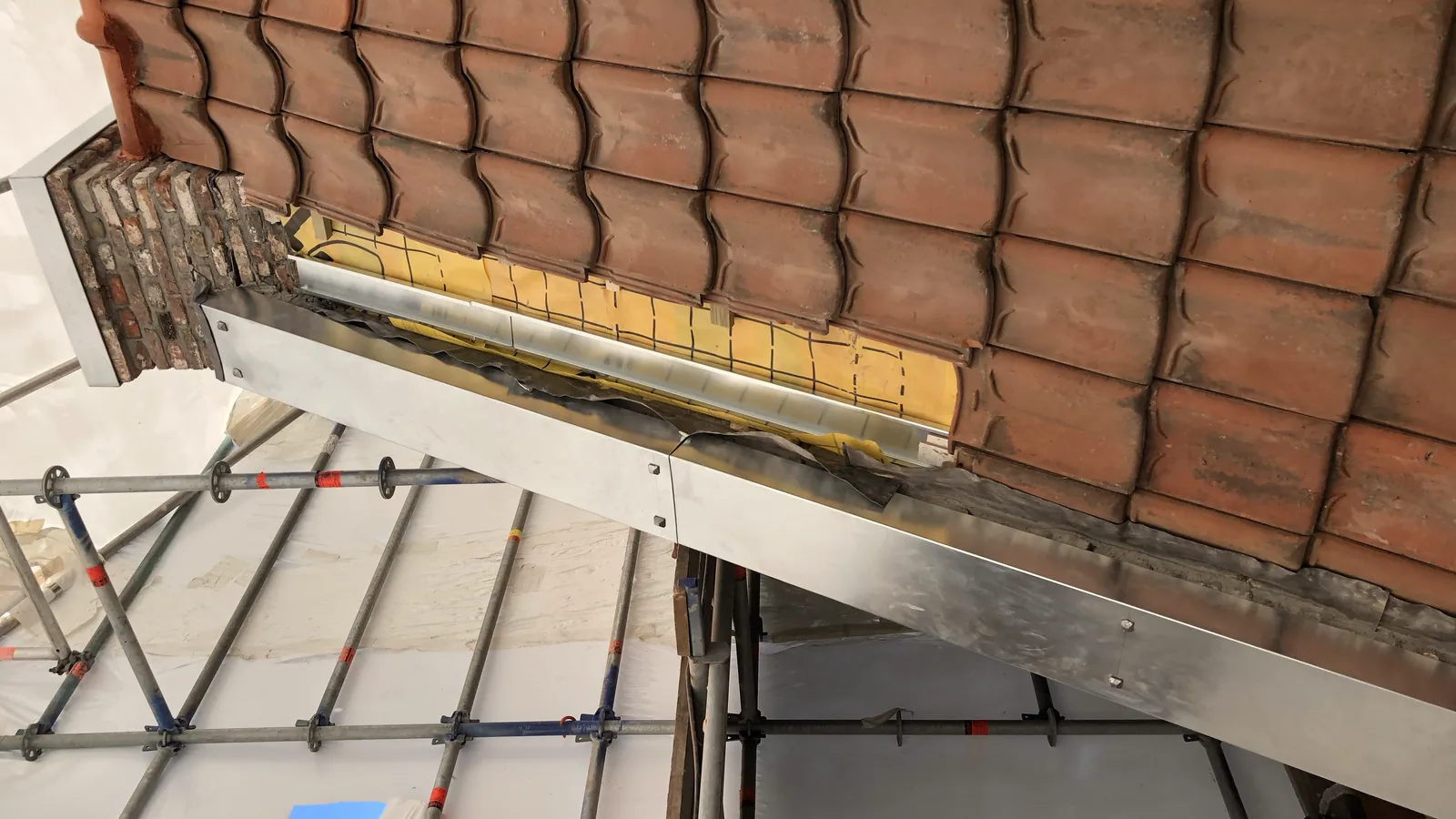
Clay roof tiles last 50 to 70 years, keep their colour, absorb little moisture and look refined. Concrete tiles last 30 to 40 years, are heavier and very robust. Choose clay for appearance and longevity, concrete for a solid, strong solution.
When you are about to replace your roof tiles, you quickly face the choice between clay and concrete tiles. Both keep your home dry for decades and are the standard for pitched roofs in the Netherlands. Yet they differ in lifespan, weight, moisture absorption, appearance and maintenance. At Dakservice van Belzen we explain honestly below where they differ and which tile suits which situation, with no sales pitch.
What is the difference between clay and concrete roof tiles?
The difference lies in the material. Clay tiles are made from clay fired at high temperature, often finished with a glaze or engobe layer. That finish makes them colour-fast and means they absorb almost no moisture. Concrete tiles are pressed from a mix of sand, cement and pigment. They are slightly cheaper to produce, heavier and have a rougher texture, which makes them hold onto moss and algae more readily.
Both types are excellent, proven roof coverings. The choice is not about “good or bad”, but about what best suits your home, your roof structure and how far into the future you want to look.
Clay or concrete roof tiles: the comparison
The table below sets the key properties side by side, so you can see at a glance where the two differ.
| Property | Clay tiles | Concrete tiles |
|---|---|---|
| Lifespan | 50 – 70 years | 30 – 40 years |
| Weight | Lighter | Heavier (needs a stronger roof structure) |
| Moisture absorption | Very low (thanks to glaze/engobe) | Higher; absorb more moisture |
| Colour-fastness | Excellent, colour stays attractive for years | Can fade over time |
| Appearance | Refined, classic, often glossy | Sleek, modern, usually matte |
| Maintenance | Low; less prone to moss | Slightly more; more prone to moss and algae |
| Impact strength | Somewhat more brittle | Very robust and impact-resistant |
When should you choose clay roof tiles?
Clay tiles are the choice if you mainly value appearance and longevity. They give a roof a refined, often classic look and keep their colour for many years. Because they absorb almost no moisture, they are slower to attract moss and stay cleaner for longer. With a lifespan of 50 to 70 years, in many cases you are laying a roof for life.
Choose clay when:
- You want a roof that lasts as long as possible and never needs replacing again.
- Appearance matters to you, for example on a characterful or listed property.
- You want as little maintenance as possible and a colour that stays attractive for years.
- Your roof structure suits the lighter weight (almost always the case).
When should you choose concrete roof tiles?
Concrete tiles are a solid, strong and versatile choice. They are very robust and impact-resistant, which makes them popular on new-build and on large roofs. The downsides are that they are heavier, requiring a stronger roof structure, and that their rougher surface holds onto moss and algae more readily. To learn more about removing it, read our article on removing moss and algae from your roof.
Choose concrete when:
- You want a strong, robust tile that can take a knock.
- You prefer a sleek, modern look, often in a matte colour.
- Your roof structure is designed for the higher weight.
- You don’t mind periodic moss removal in return for a solid solution.
Mind the weight and the roof structure
An important point that is often forgotten: concrete tiles are heavier than clay tiles. If you replace old clay tiles with concrete, your roof structure must be able to carry the extra weight. The other way round, from concrete to clay, is almost never a problem. We always assess this on site during a roof inspection, so you are never caught out by surprises. Where needed, we also check the battens, the underlay and the woodwork beneath.
Lifespan: how long does each type last?
The lifespans given apply to properly laid and maintained tiles. In Dutch practice clay tiles often reach 50 to 70 years, concrete tiles typically 30 to 40 years. Good maintenance, adequate ventilation and timely inspection make a big difference. To see how tiles compare with other roof coverings such as bitumen, EPDM or zinc, read our overview of roof lifespan.
Which suits your roof best?
There is no universally best tile; there is only the best tile for your situation. Is it a characterful home where you want the roof to stay attractive for decades? Then we often recommend clay. Are you after a robust, sleek solution and is your structure designed for it? Then concrete is an excellent, solid choice. We always look at your home, your wishes and your budget, and give you honest advice.
Unsure whether to choose clay or concrete roof tiles? Feel free to send us a WhatsApp message; we reply within 2 hours and often come round within 24 hours. After a free roof inspection we provide a no-obligation, tailored quote, with up to 15 years of warranty on the roofing work. With us, you are never just a number.
Last updated:
Frequently asked questions
In Dutch practice clay roof tiles typically last 50 to 70 years, concrete tiles 30 to 40 years. With both, good maintenance, adequate ventilation and a timely roof inspection extend the lifespan considerably.
Yes. Concrete tiles are noticeably heavier. If you want to replace old clay tiles with concrete, your roof structure must be able to carry the extra weight. We always assess this on site before advising, so you are not caught out by surprises.
Concrete tiles have a rougher surface and absorb more moisture, so they hold onto moss and algae more readily than clay tiles. Glazed or engobe-finished clay stays cleaner for longer. Also read our article on removing moss and algae.
That depends on many things: the area of your roof, the chosen tile, the condition of the underlay and woodwork, accessibility and whether scaffolding is needed. After a free roof inspection we provide a no-obligation, tailored quote, because we can only give an honest price once we have seen your roof.